A walk for the views — through deodar and cypress forest to one of the finest Himalayan viewpoints in Kumaon.
The forest walk in Binsar Sanctuary is a favourite with our guests. One stretch of it, the Panchchuli Trail, is named after the five snow peaks you can see from it. The path is well worn, and you will usually meet other walkers on the way.
The route
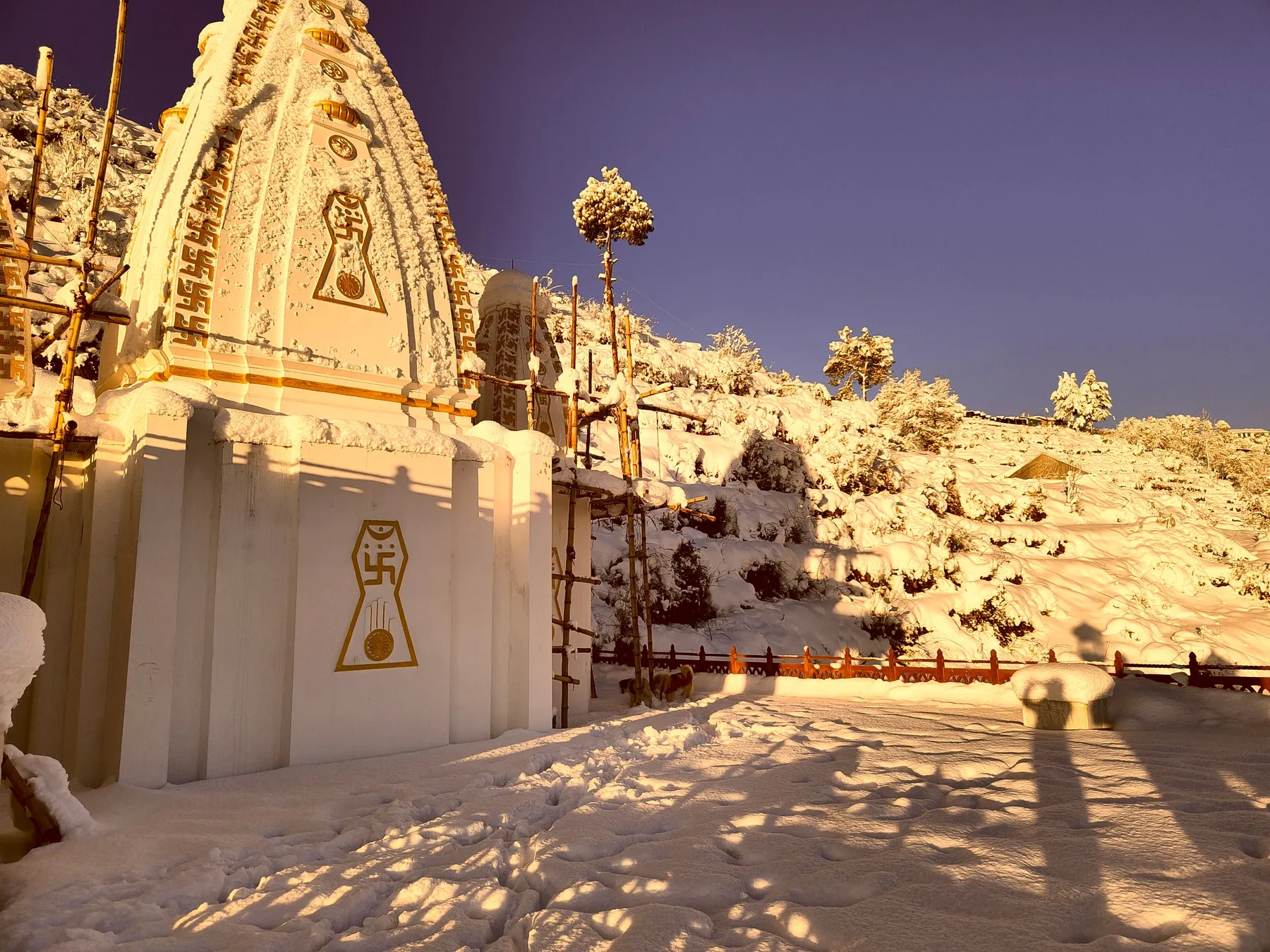
The route passes the Bineshwar Mahadev temple. A short stretch along the tarred road brings you to a water tank that holds water from a natural spring (a srot). From there a steep trail climbs to the Forest Rest House.
Many Himalayan villages draw their water from rivers fed by melting snow, but in the rolling hills of Kumaon villages often depend on springs instead. The water rises naturally to the surface and is carried to the villages nearby — a way of life that is very old here.
The Forest Rest House
The Forest Rest House dates from 1902, in British times: a charming old building with a veranda along its sides, surrounded by tall deodar trees. The British often planted deodars near their houses so that lightning would strike the trees rather than the buildings. It is a good place for a short rest.
Panchchuli Trail and Zero Point
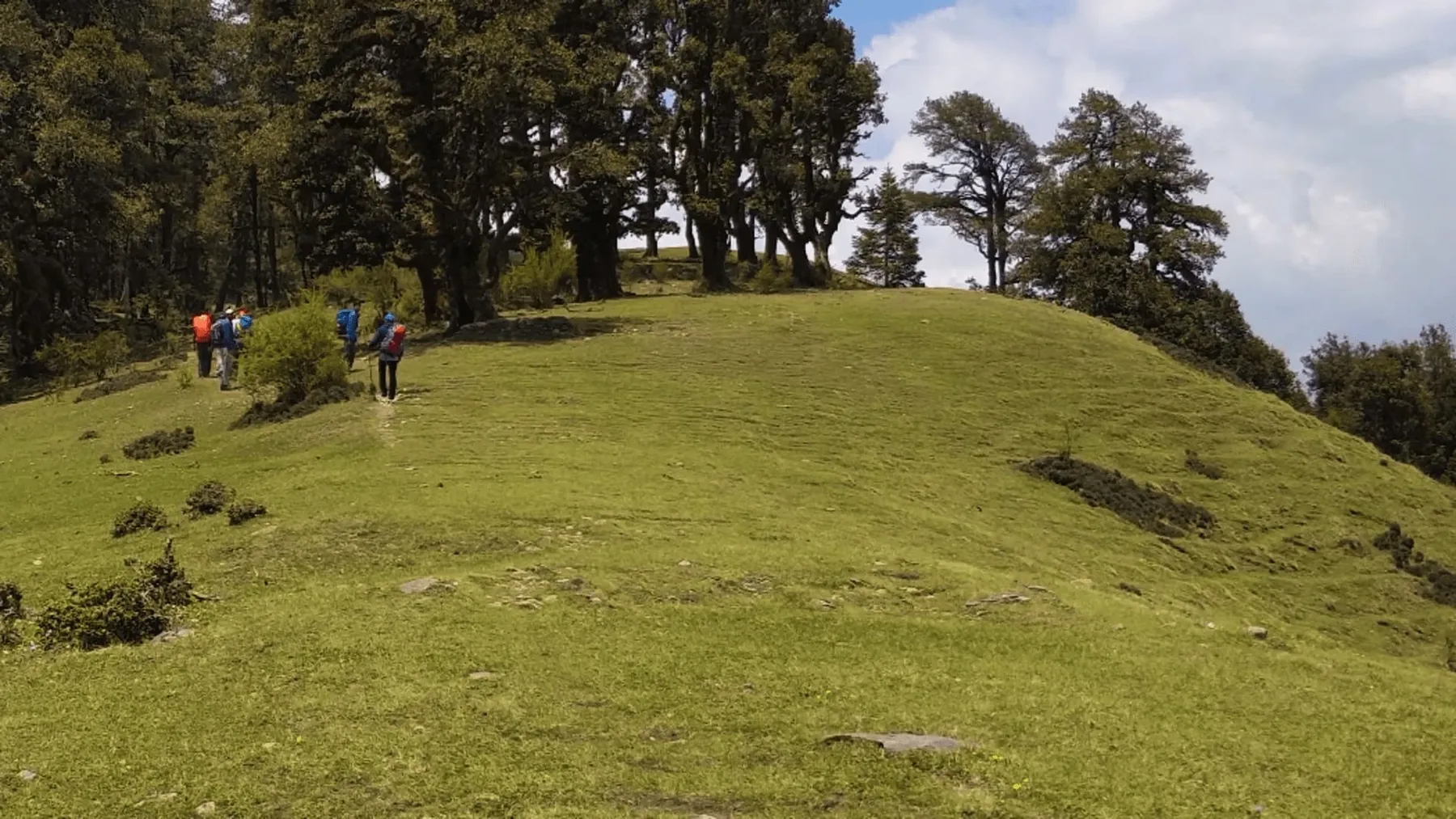
After your rest, rejoin the tarred road for about half a kilometre and turn off into a stretch of thick deodar and cypress forest. About half a kilometre further you reach the Panchchuli Trail, a wide, mostly level dirt path that leads on to Zero Point.
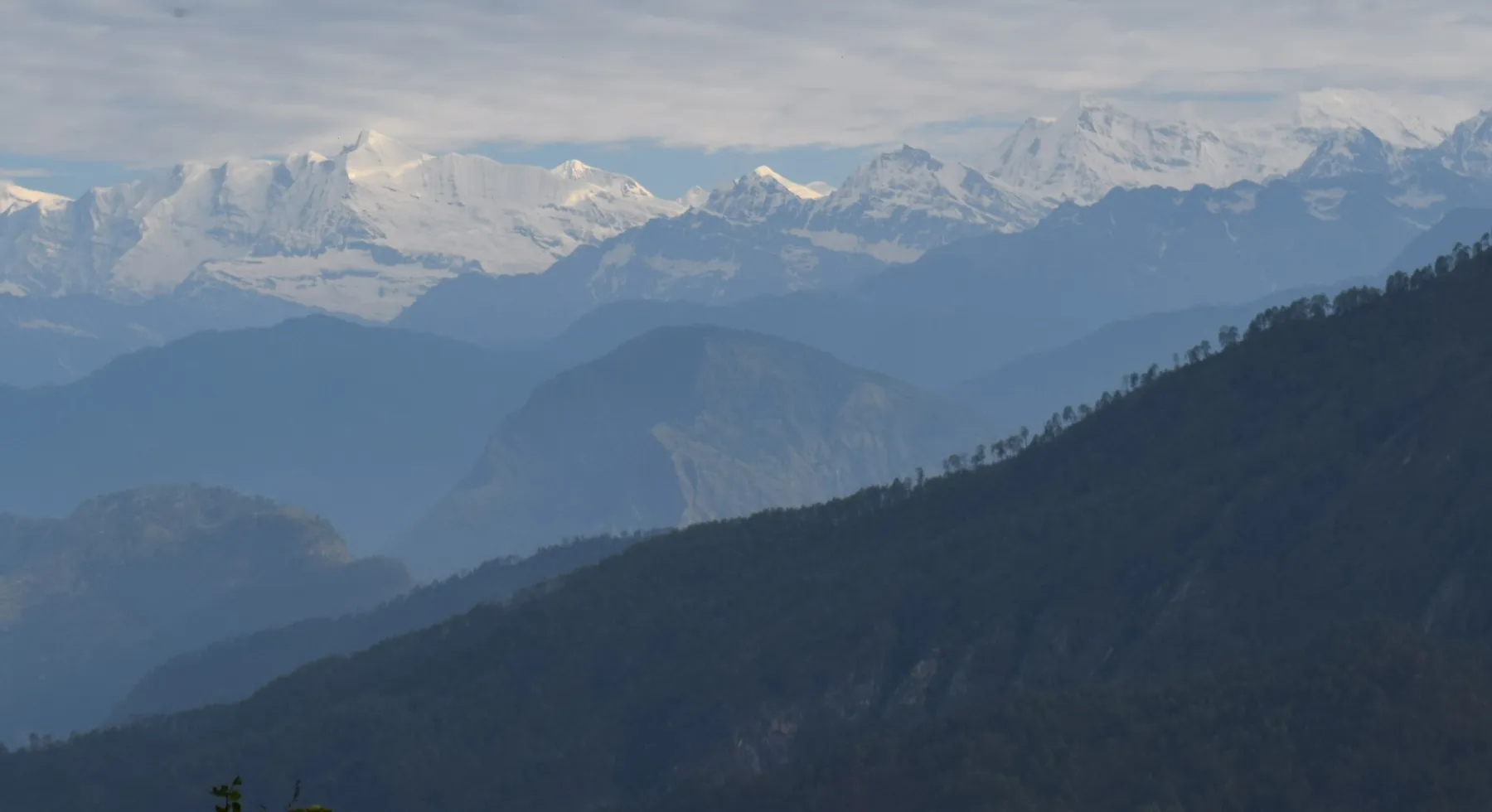
The Himalayas open up on the right of the trail, with clear views of the Panchchuli peaks. The evenings are especially lovely, when the hills turn from orange to pink before the sun sets and the snow peaks fade to white.
Zero Point is the highest viewpoint in the sanctuary, with a 360-degree view of Kedarnath, Shivling, Trishul and the Nanda Devi group of peaks.
Please ask us before you set out about timings, a guide and the weather.